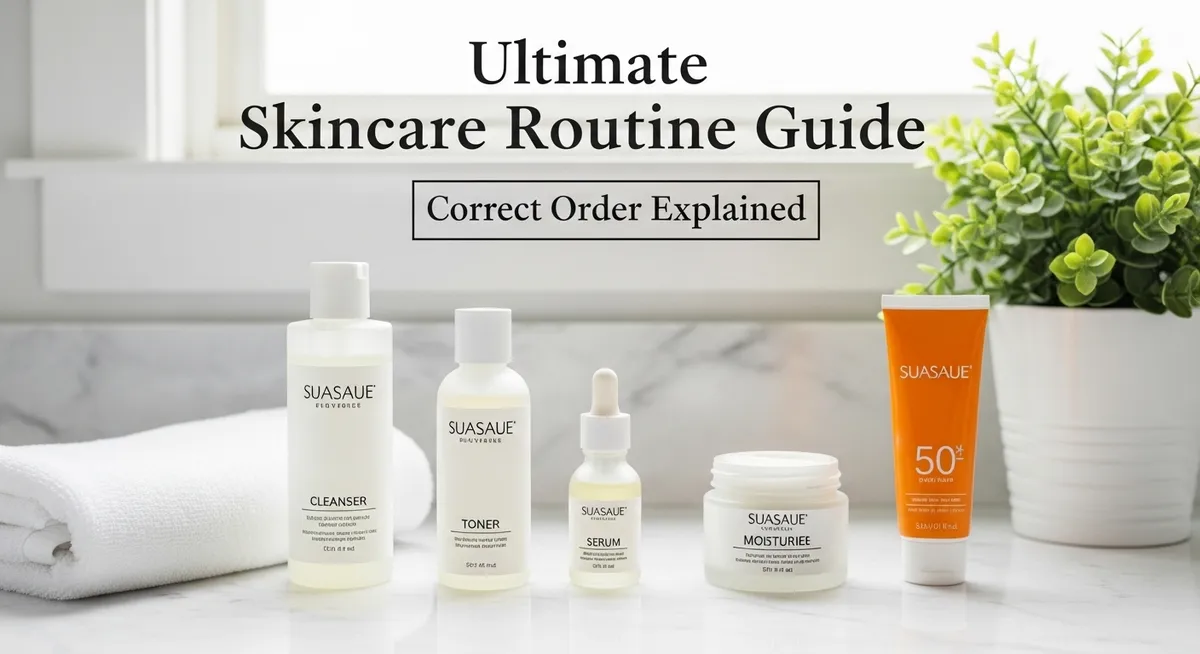
Building a skincare routine doesn't have to be complicated — but getting it right can transform your skin. Whether you're dealing with breakouts, dryness, premature aging, or just want that coveted "glass skin" glow, the right routine tailored to your skin type is the foundation of healthy, beautiful skin.
In this comprehensive guide, we'll walk you through exactly how to build an effective skincare routine step by step — including product recommendations at every price point, tips from dermatologists, and the most common mistakes that could be sabotaging your results.
Why You Need a Consistent Skincare Routine
Your skin is your body's largest organ, and like any other organ, it needs consistent care to function at its best. A well-designed skincare routine does three critical things:
- Protects your skin barrier from environmental damage, pollution, and UV rays
- Repairs daily damage and supports cell turnover while you sleep
- Prevents premature aging, breakouts, and hyperpigmentation before they start
Research published in the Journal of Dermatological Science shows that consistent use of even basic skincare products — cleanser, moisturizer, and SPF — can significantly slow visible signs of aging and improve skin health metrics over time.
The Science: Circadian Rhythms & Your Skin
Did you know your skin tells time? Just like your sleep-wake cycle, your skin cells operate on a strict 24-hour biological clock known as the Circadian Rhythm. Understanding this cycle is the secret to maximizing your products.
Day Mode: Defense 🛡️
During daylight hours, your skin's primary function is protection. Skin thickness actually increases in the morning, and sebum production peaks around midday to coat the skin surface. This is your body's natural armor against UV radiation, pollution, and free radicals.
Takeaway: This is why your morning routine must be antioxidant-rich (Vitamin C) and include SPF. You are reinforcing your shields.
Night Mode: Repair 🛠️
Once the sun sets, your skin switches into recovery mode. DNA repair mechanisms kick in to fix damage from the day. Skin permeability (how easily things pass through) is highest at night, meaning ingredients penetrate deeper—but you also lose more water (Trans-Epidermal Water Loss or TEWL).
Takeaway: Night is the time for actives like Retinol and Peptides, followed by occlusive moisturizers to stop water loss.
The Stress Factor: Cortisol
Stress isn't just a feeling; it's a chemical event. When you're stressed, your body spikes Cortisol. High cortisol levels signal your sebaceous glands to produce more oil (leading to acne) while simultaneously degrading collagen (leading to wrinkles).
If you are going through a high-stress period, your skin barrier is likely compromised. This is not the time to introduce harsh 15-step routines. Simplify to the basics: gentle cleansing, extreme hydration, and sleep.
💡 Science Fact
Skin cell regeneration almost doubles at night, peaking between 11 PM and 4 AM. This is why "Beauty Sleep" is a medically accurate term. If you consistently stay up until 2 AM, you are missing your skin's prime repair window.
💡 Pro Tip
Consistency beats complexity. A simple 3-step routine you follow every day will always outperform a 10-step routine you only do occasionally. Start simple and build up as your skin adjusts.
How to Determine Your Skin Type
Before building your routine, you need to know your skin type. Here's the easiest method — the "bare face test":
- Wash your face with a gentle cleanser and pat dry
- Wait 30 minutes without applying any products
- Examine your skin in natural light
oily-skin" class="ingredient-link">Oily Skin: Your face looks shiny all over, especially the T-zone (forehead, nose, chin). Pores appear visibly enlarged.
Dry Skin: Skin feels tight, may appear flaky or rough. Fine lines look more prominent.
Combination Skin: Oily in the T-zone but dry or normal on the cheeks. This is the most common skin type.
Sensitive Skin: Skin easily gets red, itchy, or stings when using new products. May have visible redness or rosacea.
Normal Skin: Balanced — not too oily, not too dry. Few blemishes and barely visible pores. Lucky you!
The Perfect Morning Routine (5 Steps)
Your morning routine is all about protection. You're shielding your skin from pollution, UV damage, and environmental stressors you'll face throughout the day.
Step 1: Gentle Cleanser
Start with a gentle cleanser to remove any sweat, oil, or product residue from overnight. Avoid harsh, stripping cleansers in the morning — you don't need them.
CeraVe Hydrating Facial Cleanser
A gentle, non-foaming cleanser with ceramides and hyaluronic acid that cleans without stripping. Works for all skin types and is fragrance-free. Dermatologist-recommended and backed by over 50,000 five-star reviews.
Step 2: Toner (Optional but Beneficial)
A good toner rebalances your skin's pH after cleansing and preps it to absorb the next products more effectively. Look for hydrating toners with ingredients like niacinamide, hyaluronic acid, or centella asiatica.
Step 3: Serum
Serums are concentrated treatments that target specific skin concerns. In the morning, reach for an antioxidant serum — particularly Vitamin C — to protect against free radical damage and brighten your complexion.
The Ordinary Hyaluronic Acid 2% + B5
A water-based serum with multi-weight hyaluronic acid for deep hydration across multiple layers of skin. Vitamin B5 enhances surface hydration. Incredible value at under $10.
✅ Pros
- Exceptional value
- Multi-weight HA formula
- Layers well
- Fragrance-free
❌ Cons
- Can pill under some products
- Apply to damp skin for best results
Step 4: Moisturizer
Moisturizer locks in all the good stuff from your serum and creates a protective barrier. Choose based on your skin type: lightweight gels for oily skin, rich creams for dry skin.
Step 5: Sunscreen (Non-Negotiable!)
SPF is the single most important anti-aging product you can use. UV damage accounts for up to 80% of visible skin aging. Apply at least SPF 30 every morning, rain or shine, even if you're staying indoors near windows.
La Roche-Posay Anthelios Melt-in Milk SPF 60
Broad spectrum SPF 60 with Cell-Ox Shield technology. Ultra-lightweight, fast-absorbing, and leaves no white cast. Suitable for sensitive skin and sits perfectly under makeup.
✅ Pros
- SPF 60 protection
- No white cast
- Great under makeup
- Sensitive skin friendly
❌ Cons
- Higher price point
- Can feel slightly greasy on very oily skin
The Perfect Evening Routine (6 Steps)
Your evening routine is all about repair. At night, your skin's natural repair process kicks into high gear, so this is the time to use active ingredients like retinol, exfoliating acids, and nourishing treatments.
Step 1: Oil Cleanser or Makeup Remover
If you wear makeup or sunscreen (which you should!), start with an oil-based cleanser to dissolve those stubborn products. This is the first step of "double cleansing" — a technique that ensures truly clean skin.
Step 2: Water-Based Cleanser
Follow with your regular gentle cleanser to remove any remaining residue. This two-step process ensures all impurities are gone without over-stripping.
Step 3: Exfoliant (2-3 Times Per Week)
Chemical exfoliants like BHA (salicylic acid) for oily/acne-prone skin or AHA (glycolic acid) for dry/dull skin remove dead cells and boost cell turnover. Don't exfoliate daily — 2-3 times per week is optimal.
Paula's Choice 2% BHA Liquid Exfoliant
The gold-standard chemical exfoliant. 2% salicylic acid unclogs pores, smooths skin texture, and reduces redness. Gentle enough for regular use yet remarkably effective. Over 15,000 five-star reviews.
✅ Pros
- Unclogs pores effectively
- Smooths texture
- Gentle formula
- Fragrance-free
❌ Cons
- Not the cheapest option
- Start slow to avoid irritation
Step 4: Treatment Serum
Nighttime is when you apply your targeted treatments — retinol for anti-aging, niacinamide for pores and redness, or azelaic acid for hyperpigmentation.
Step 5: Eye Cream
The delicate under-eye area needs its own targeted product. Look for peptides and caffeine for puffiness, or retinol-based formulas for fine lines.
Step 6: Night Moisturizer or Sleeping Mask
Seal everything in with a richer moisturizer or overnight sleeping mask. Your skin loses moisture while you sleep, so go heavier than your daytime moisturizer.
Techniques That Matter: It's How You Apply It
Having the right products is only half the battle. How you apply them changes absorption and results. Here are the dermatologist-approved techniques to upgrade your routine.
1. The "13-Dot" Technique (For Even Coverage)
Most people rub product between their hands and slap it on. Instead, dot your moisturizer or serum in 13 spots: 3 on forehead, 3 on each cheek, 2 on nose, 2 on chin. Then connect the dots. This ensures every millimeter of skin gets the same dosage.
2. Patting vs. Rubbing
Rubbing creates friction/heat and can pull on delicate skin (causing sagging over time). Patting (or pressing) forces product deeper into pores and stimulates blood flow without the drag. Always pat your toners and serums.
3. The "Damp Skin" Rule
Your skin is like a sponge. A dry sponge creates a barrier; a damp sponge absorbs everything instantly. Always apply your hydrating serums and moisturizers within 60 seconds of cleansing, while skin is still slightly damp. This traps water inside and can double the effectiveness of your Hyaluronic Acid.
Best Routine for Oily Skin
If your skin tends to get shiny by midday, focus on lightweight, oil-free, non-comedogenic products. Key ingredients to look for:
- Niacinamide — regulates oil production and minimizes pores
- Salicylic Acid (BHA) — penetrates pores to clear congestion
- Hyaluronic Acid — hydrates without adding oil
- Gel-based moisturizers — lightweight hydration that won't clog pores
💡 Pro Tip
Oily skin still needs moisturizer! Skipping moisturizer can actually make oily skin worse — your skin compensates by producing even more oil. Use a lightweight, oil-free gel moisturizer instead.
Best Routine for Dry Skin
Dry skin needs extra moisture and barrier support. Focus on cream-based, hydrating products. Key ingredients:
- Ceramides — repair and strengthen your skin barrier
- Hyaluronic Acid — draws moisture deep into skin
- Squalane — a lightweight oil that mimics your skin's natural oils
- Glycerin — a humectant that attracts moisture
Best Routine for Combination Skin
Combination skin requires a balanced approach. You might need to use different products on different areas of your face — lighter products on your oily T-zone and richer formulas on drier cheeks.
- Use a gentle, balanced cleanser (not too stripping, not too creamy)
- Apply lightweight serum all over, then spot-treat dry areas with a richer moisturizer
- Use BHA only on your oily zone (T-zone) rather than all over
Best Routine for Sensitive Skin
Sensitive skin requires a minimalist approach with fragrance-free, hypoallergenic products. Key rules:
- Introduce one new product at a time and wait 2 weeks before adding another
- Avoid essential oils, fragrances, alcohol, and harsh exfoliants
- Look for soothing ingredients: centella asiatica, aloe vera, oat extract, allantoin
- Always patch test new products on your inner forearm first
Advanced Troubleshooting: When Good Routines Go Bad
Even the best products can fail if used incorrectly. Here is how to diagnose common routine issues.
1. Pilling (Little Balls of Product)
The Cause: Incompatible textures (oil over water), silicones, or not waiting long enough between steps.
The Fix:
- Apply products from thinnest to thickest consistency.
- Wait 60 seconds between layers.
- Avoid rubbing; try patting products into your skin instead.
2. Stinging vs. Burning
Stinging: A mild tingle (especially with acids or Vitamin C) that goes away in seconds is usually fine. This is often just the pH difference.
Burning: Heat and pain that lasts more than a minute is a red alert. Your moisture barrier is broken. Stop all actives immediately and focus on repair (ceramides, hyaluronic acid) for 2 weeks.
3. Purging vs. Breakouts
When you start a new active (Retinol, AHA/BHA), your skin turnover speeds up, bringing hidden clogs to the surface fast.
- Purging: Pimples in areas you normally break out. Disappear faster than normal. Keep going.
- Reaction: Pimples in new areas, rash-like texture, or itchiness. Stop immediately.
The "Can I Mix This?" Cheat Sheet
Chemistry matters. Mixing the wrong ingredients can neutralize their effects or cause chemical burns. Use this guide to stay safe.
| Ingredient | Do NOT Mix With ❌ | Best Friends With ✅ |
|---|---|---|
| Retinol | Vitamin C, AHA/BHA, Benzoyl Peroxide | Hyaluronic Acid, Ceramides, Niacinamide |
| Vitamin C | Retinol, AHA/BHA (can flush), Niacinamide (old myth, but can flush) | Vitamin E, Ferulic Acid, SPF |
| AHA/BHA (Acids) | Retinol, Vitamin C | Hyaluronic Acid, SPF |
| Niacinamide | Vitamin C (Only at high heat/low pH, mostly safe now) | Retinol, Zinc, Hyaluronic Acid |
| Benzoyl Peroxide | Retinol (deactivates it), Vitamin C | Hydrating cleansers, SPF |
10 Common Skincare Mistakes to Avoid
- Skipping sunscreen — the #1 mistake that accelerates aging
- Over-exfoliating — stick to 2-3 times per week maximum
- Using too many new products at once — introduce one product every 2 weeks
- Not giving products enough time — most products need 6-8 weeks to show results
- Applying products in the wrong order — always go thinnest to thickest consistency
- Using hot water to wash your face — lukewarm water is best
- Sleeping in makeup — always double cleanse at night
- Ignoring your neck and chest — extend your routine below your jawline
- Touching your face throughout the day — hands transfer bacteria and oils
- Expecting overnight results — skincare is a marathon, not a sprint
💡 Bottom Line
The best skincare routine is one you'll actually stick to. Start with the basics — cleanser, moisturizer, and SPF — then add targeted treatments as needed. Your future skin will thank you.
Disclosure: This article contains affiliate links. When you purchase through our links, we may earn a small commission at no extra cost to you. See our affiliate disclosure for details.

Ivana Dsouza
Beauty editor and skincare researcher at NxtLifestyle. Dedicated to finding scientifically-backed products that actually work.