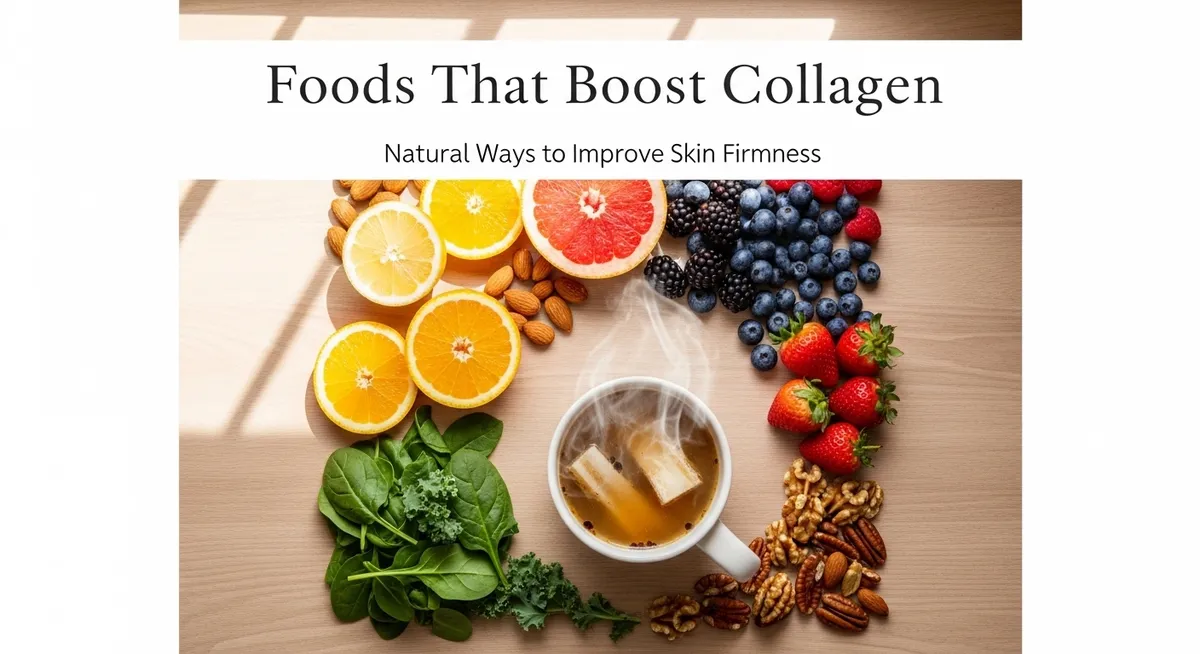
Foods That Boost Collagen Production Infographic
Discover the essential steps for foods that boost collagen production. Follow our expert guide to achieve your beauty goals effectively.

Affiliate disclosure: This article contains affiliate links. We may earn a commission at no extra cost to you.

๐ŸŒŸ Introduction

Collagen is the protein that keeps your skin firm, plump, and youthful. After age 25, your body produces 1% less collagen each year โ€” leading to wrinkles, sagging, and loss of elasticity.

Advertisement

The good news? Certain foods can stimulate your body's natural collagen production. This guide reveals the top collagen-boosting foods and how to eat them for maximum impact.

๐Ÿ”ฌ Why This Matters for Skin & Beauty

Collagen makes up 75% of your skin's dry weight. It provides the structural framework that keeps skin firm. Without adequate collagen, skin loses its bounce and develops fine lines.

Your body needs specific amino acids (proline, glycine, hydroxyproline) plus Vitamin C, zinc, and copper to synthesize collagen. The right foods deliver all of these.

๐Ÿฅ— Top Collagen-Boosting Foods

1. Bone Broth

The #1 food source of collagen. Contains Types I and III collagen, plus glycine and proline. Slow-cook bones for 12-24 hours for maximum extraction.

2. Citrus Fruits

Vitamin C is essential for collagen synthesis โ€” without it, your body literally cannot make collagen. Oranges, lemons, and grapefruits deliver high doses.

3. Berries

Strawberries contain more Vitamin C per serving than oranges. Blueberries add ellagic acid that prevents collagen breakdown from UV exposure.

4. Garlic

Contains sulfur, which is necessary for collagen synthesis. Also contains taurine and lipoic acid that help rebuild damaged collagen fibers.

5. Leafy Greens

Chlorophyll in spinach and kale increases procollagen production. These greens also deliver Vitamin C and antioxidants.

6. Eggs

Egg whites contain proline, one of the key amino acids needed for collagen production. The yolks contain Vitamin D which supports skin health.

7. Fish & Shellfish

Marine collagen from fish skin and bones is highly bioavailable. Shellfish also provides zinc and copper for collagen synthesis.

8. Cashews & Almonds

Rich in copper and zinc โ€” two minerals essential for collagen cross-linking and stability.

9. Tomatoes

Contain lycopene which protects existing collagen from UV-induced breakdown. Also provides Vitamin C for new collagen production.

10. Bell Peppers

Red bell peppers have 3x more Vitamin C than oranges, plus capsanthin โ€” an antioxidant that fights collagen-damaging enzymes.

๐Ÿ“… How to Add This to Your Daily Routine

Morning: Warm bone broth with lemon juice + smoothie with berries and spinach.

Afternoon: Salad with bell peppers, tomatoes, eggs, and cashews.

Evening: Fish with garlic, leafy greens, and citrus dressing.

๐Ÿ’Š Best Products to Try

Vital Proteins Collagen Peptides

Best for: Daily collagen supplementation

  • โœ… Grass-fed bovine
  • โœ… 20g protein per serving
  • โœ… Dissolves in any drink
๐Ÿ‘‰ Check Price on Amazon

NeoCell Super Collagen + Vitamin C

Best for: Budget collagen with Vitamin C boost

  • โœ… Types 1 & 3 collagen
  • โœ… Added Vitamin C
  • โœ… Affordable
๐Ÿ‘‰ Check Price on Amazon

Garden of Life Vitamin C Spray

Best for: Vitamin C for collagen synthesis

  • โœ… Whole-food sourced
  • โœ… Easy spray format
  • โœ… No artificial ingredients
๐Ÿ‘‰ Check Price on Amazon

โš ๏ธ Common Mistakes to Avoid

  • โŒ Taking collagen without enough Vitamin C (body can't use it)
  • โŒ Excessive sugar intake destroying collagen via glycation
  • โŒ Sun exposure without SPF โ€” UV is the #1 collagen destroyer
  • โŒ Expecting collagen drinks to work without dietary changes
  • โŒ Smoking โ€” it directly breaks down collagen fibers

โœ… Quick Checklist

  • โœ… Drink bone broth 3-4 times per week
  • โœ… Eat Vitamin C-rich foods with every meal
  • โœ… Include 2+ servings of berries daily
  • โœ… Add garlic to your cooking regularly
  • โœ… Use SPF daily to protect existing collagen

โ“ Frequently Asked Questions

โ“ At what age does collagen decline?

Collagen production drops about 1% per year starting in your mid-20s, accelerating after menopause.

โ“ Can food really boost collagen?

Yes โ€” foods provide the raw amino acids and co-factors (Vitamin C, zinc, copper) your body needs to synthesize collagen.

โ“ Are collagen supplements necessary?

They can help, but whole foods provide a broader range of nutrients. Supplements work best alongside a collagen-boosting diet.

โ“ How long to see results?

Dietary collagen support shows visible skin improvements in 8-12 weeks with consistency.

โ“ Does cooking destroy collagen in food?

Slow cooking actually breaks collagen into digestible gelatin and absorbable peptides โ€” that's why bone broth works so well.

๐Ÿ’š Conclusion

Collagen is the foundation of youthful skin, and you can actively support its production through smart nutrition. Combine collagen-rich foods with Vitamin C sources, protect your existing collagen from UV damage, and watch your skin transform from within. ๐ŸŒฟ