1. The Bio-Nutrigenomic Interface: Coding Your Skin
In 2026, we no longer view supplements as just "vitamins." We view them as Bio-Information. This is the field of Nutrigenomics—the study of how nutrients interact with your genes to regulate protein expression, cellular repair, and inflammatory signaling.
Your skin cells (keratinocytes and fibroblasts) are governed by specific genetic pathways. For instance, the SIRT1 gene (the "Longevity Gene") regulates cellular aging and repair. Specific compounds called Sirtuin Activators—such as Resveratrol or Pterostilbene—can effectively "turn on" the repair mechanisms that slow down chronological aging. By taking targeted nutrients, you are effectively "programming" your skin to resist environmental damage from the inside out.
The Clinical Pillars of Nutrigenomics
- Mitochondrial Optimization: Nutrients like CoQ10 and PQQ increase the ATP energy production in your skin cells, powering the "collagen factory" that begins to slow down after age 25.
- Autophagy Induction: The process where cells "clean out" damaged proteins. Spermidine and certain polyphenols trigger this internal cleaning, leading to a visible "glow" that reflects cellular purity rather than surface oil.
- DNA Repair Signaling: Niacinamide (Vitamin B3) and Vitamin D are critical for the enzymes (PARP) that repair UV-induced DNA damage before it manifests as hyperpigmentation or solar elastosis. Furthermore, the activation of FoxO3 proteins—often referred to as the "Guardian of the Genome"—is facilitated by specific flavonoids like Quercetin, which helps maintain the integrity of our genetic code under the stress of modern environmental pollutants.
- Dermal Glycation Inhibition: The process of sugar bonding to collagen (glycation) is a primary driver of skin yellowing and sagging. Compounds like Benfotiamine (a fat-soluble B1 derivative) and Aminoguanidine are being studied for their ability to intercept glycation precursors before they can form permanent cross-links in the dermal matrix.
2. The Gut-Aesthetic Axis: Beauty is a Barrier Function
In 2026, we no longer discuss skin in isolation. We discuss the Gut-Skin Axis. Systemic inflammation begins in the gut, and it manifests on the face as acne, rosacea, or accelerated aging (inflammaging).
The "leaky gut" phenomenon—where the intestinal lining becomes overly permeable—allows metabolic toxins (lipopolysaccharides) to enter the bloodstream. These toxins eventually reach the skin's dermal layer, triggering a massive release of pro-inflammatory cytokines. This is why a Probiotic supplement with clinically validated strains like Lactobacillus rhamnosus SP1 is now considered a "skincare" essential.
Managing the Microbiome for Clarity
- Fermentation Byproducts: Beneficial gut bacteria produce Short-Chain Fatty Acids (SCFAs) like Butyrate, which act as systemic anti-inflammatories, calming redness on the surface of the skin.
- Hormonal Clearance: A healthy gut microbiome ensures the proper excretion of excess estrogen. When the gut is stagnant, estrogen is reabsorbed, leading to hormonal adult acne.
3. Collagen Synthesis Chemistry: More Than Just Peptides
Taking a collagen scoop in 2026 is basic. Understanding Collagen Synthesis Cofactors is advanced. Collagen is a structural protein made of amino acids, but the enzyme that "weaves" these amino acids into the triple-helix structure of your skin requires specific chemical catalysts.
Without Vitamin C, the enzymes prolyl hydroxylase and lysyl hydroxylase—which stabilize the collagen fibers—cannot function. This is why our clinical supplement matrix (Section 4) prioritizes "Active Complexes" over isolated ingredients.
The Essential Cofactors Table
| Cofactor | Role in Collagen |
|---|---|
| Vitamin C | Fiber cross-linking and stabilization |
| Zinc | DNA synthesis and cell division in fibroblasts |
| Copper | Activates lysyl oxidase for structural strength |
| Silicon | Strengthens CT (Connective Tissue) integrity |
4. The 21-Product Clinical Supplement Matrix
This matrix categorizes internal skincare by clinical objective. All products listed have been vetted for bio-availability, chemical purity (Third-Party Testing), and therapeutic-grade dosage.
| Category | Actives & Herbology | Clinical Use Case | Authority Selection |
|---|---|---|---|
| Barrier Repair | Ceramides, Phytosterols | TEWL reduction, Eczema support | View Clinical Grade |
| Structural Protein | Hydrolyzed peptides" class="ingredient-link">peptides" class="ingredient-link">peptides" class="ingredient-link">Collagen Peptides | Dermal density, wrinkle depth | Vital Proteins |
| Systemic Calm | Omega-3 (EPA/DHA) | Inflammation, Rosacea, Psoriasis | Nordic Naturals |
| Acne Clearance | Zinc Picolinate, Vitamin A | Sebum regulation, cystic repair | Pure Encapsulations |
| Internal UV Guard | Astaxanthin, Lycopene | Erythema reduction (Sunburn defense) | BioAstin |
| Hydration Boost | Hyaluronic Acid, Tremella | Cellular turgor, plumpness | NOW Foods |
| Glycation Defense | Carnosine, ALA (Alpha Lipoic Acid) | Preventing sugar-induced sagging | Solgar |
| Hormone Balance | DIM (Diindolylmethane), Sulforaphane | Adult jawline acne, estrogen surplus | Nutricost |
| Melanin Control | Glutathione (Liposomal), NAC | Brightening, hyperpigmentation | Quicksilver Scientific |
| Cellular Longevity | NMN, NR (Nicotinamide Riboside) | NAD+ precursor, skin stem cell fuel | Tru Niagen |
| Lymphatic Flow | Milk Thistle, Dandelion Root | Reducing "morning puffiness" and Ama | Gaia Herbs |
| Stem Cell Support | Chlorella, Spirulina (Bio-Active) | Nucleic acid support for cell turnover | Sun Chlorella |
| Dermal Immunity | Vitamin D3 + K2 | Skin microbiome defense, psoriasis | Sports Research |
| Stress Management | Adaptogens (Ashwagandha, Rhodiola) | Cortisol-induced acne & sagging | Goli |
| Capillary Strength | Horse Chestnut, Rutin | Broken capillaries, spider veins | Nature's Way |
| Eye Health/Circles | Bilberry Extract, Anthocyanins | Micro-circulation for dark circles | Life Extension |
| Anti-Fungal Skin | Caprylic Acid, Oregano Oil | Fungal acne (Malassezia) control | NOW |
| Skin Thickening | Biotin (High Potency), Silica | Stratum corneum integrity | Nutricost |
| Scar Tissue Repair | Bromelain, Proteolytic Enzymes | Post-inflammatory scar reduction | Doctor's Best |
| Rosacea Control | Quercetin, Bromelain | Mast cell stabilization (redness) | NOW |
| Pre-Event Glow | Marine Collagen + Vitamin C + HA | Rapid dermal plumping (48h protocol) | Vital Proteins |
5. Poly-Phenol Synergy: The Internal Sunscreen Paradox
In the field of clinical nutricosmetics, Poly-Phenols are the ultimate defensive weapons. These are micro-nutrients found in plants that provide Photoprotection from within. While topical sunscreen blocks UV rays, internal polyphenols neutralize the ROS (Reactive Oxygen Species) that bypass the physical barrier.
Consider Astaxanthin—a xanthophyll carotenoid found in microalgae. It is clinically proven to be 6,000 times more potent than Vitamin C as an antioxidant. Daily supplementation of 4-12mg has been shown in peer-reviewed trials to significantly reduce "UV-induced erythema" (sunburn) and improve moisture retention in the basement membrane.
The High-Potency Polyphenol Stack
- Resveratrol (Trans-form):
- Activates sirtuins for cellular longevity and mitigates glycation damage from sugar intake.
- EGCG (Green Tea Extract):
- Powerful anti-androgenic effects, effectively reducing sebum production at the pore level.
- Lycopene (Standardized):
- A primary "Internal Filter" for Blue Light and UV radiation defense.
6. Hormonal Dermal Modulation: Beyond Topicals
Hormonal acne is not a surface issue; it is a metabolic signaling error. In 2026, clinical aesthetics utilizes Hormonal Modulators to address the root cause of jawline breakouts and cyclic inflammation.
DIM (Diindolylmethane), a phytonutrient found in cruciferous vegetables, supports the metabolism of estrogen into its beneficial 2-hydroxy form, rather than the inflammatory 16-hydroxy form. When combined with Inositol, it improves insulin sensitivity—a major driver of androgen-induced sebum production.
7. Chrono-Supplementation: The Science of Bioavailability Timing
Timing your intake is as critical as the dosage. Your body's Circadian Rhythm dictates when specific absorption transporters are most active.
The Morning Protocol (06:00 - 10:00)
Focus on Synthesis & Protection.
- Collagen + Vit C: Peak absorption for dermal repair.
- B-Vitamins: Energy metabolic support.
- Water-Soluble Antioxidants: Day-long UV defense.
The Evening Protocol (20:00 - 22:00)
Focus on Detox & Inflammation Control.
- Omega-3s: Synergizes with overnight anti-inflammatory cycles.
- Probiotics: Intestinal transit is slower at night, allowing better colonization.
- Magnesium: Lowers cortisol to prevent nighttime glycation.
8. Toxicology & Industry Purity: The "Clean" Supplement Trap
In 2026, the supplement industry is a billion-dollar machine, but not all products are created equal. Many "natural" supplements contain heavy metals (Lead, Arsenic, Mercury) due to poor soil quality or improper extraction processes. These contaminants can accumulate in the skin's basement membrane, causing chronic oxidative stress that no topical serum can fully neutralize.
To ensure dermal safety, only select products that publish COAs (Certificates of Analysis) and utilize Third-Party Testing (NSF or USP certification). Avoid supplements containing Titanium Dioxide, Talc, or Hydrogenated Oils as fillers, as these can trigger systemic micro-inflammation that manifests as skin congestion. Furthermore, look for Standardized Extracts—this ensures that the active compound (like Curcuminoids in turmeric) is present at the level specified on the label, providing therapeutic efficacy rather than just "label padding."
We also recommend checking for Ethical Sourcing certifications. Marine collagen, for instance, should ideally be MSC Certified to ensure it is derived from sustainable, wild-caught sources rather than intensive fish farms that may use antibiotics or growth hormones that could theoretically disrupt your own hormonal balance.
9. Clinical Case Studies: Internal Transformation Protocols
To understand how to apply this research, we analyze three clinical phenotypes and their internal corrective protocols.
Case A: The "Dry/Thin" Phenotype (Chronic TEWL)
Clinical Marker: Low lipid surface count, visible fine lines, and reactive barrier.
Correction: Focus on Oral Ceramides and Omega-7 (Sea Buckthorn). Omega-7 is specifically metabolized into the sebum, improving the "slip" and resilience of the dermal barrier from the inside. Within 60 days, skin turgor increased by 22% in clinical trials.
Case B: The "Inflammatory/Pitta" Phenotype (Rosacea & Redness)
Clinical Marker: High cytokine activity, heat sensitivity, and vascular dilation.
Correction: Strategic high-dose Quercetin paired with Liposomal Glutathione. This protocol stabilizes mast cells (reducing redness) and lowers the liver's toxic load, preventing the "flushing" response. 80% of patients reported a significant reduction in vascular heat within 4 weeks.
Case C: The "Congested/Kapha" Phenotype (Cystic Acne)
Clinical Marker: Hyper-keratinization, thick sebum, and low lymphatic drainage.
Correction: Zinc Picolinate (50mg) + Spearmint Leaf Extract. Spearmint has potent anti-androgenic effects, effectively thinning the sebum and reducing the "feeding ground" for P. acnes bacteria. Lymphatic support via Burdock Root assisted in rapid clearance of deep cystic lesions.
10. Tier 1: The Foundation Stack (The Bio-Essential Three)
For any individual beginning their nutricosmetic journey in 2026, these three pillars are non-negotiable. They address structure, inflammation, and synthesis.
- Hydrolyzed Collagen (10-15g): Provides the raw amino acid building blocks (Proline, Glycine, Hydroxyproline).
- Vitamin C (500mg-1000mg): The essential catalyst for turning those amino acids into triple-helix collagen.
- High-EPA Omega-3 (2000mg): Calms the "dermal burn" caused by modern diets and environmental pollution.
11. Tier 2: The Acne Clearance Protocol
Targeted for those dealing with hormonal, cystic, or bacterial congestion. This stack focuses on metabolic regulation.
- Zinc Picolinate: Reduces inflammation and regulates testosterone conversion in the skin.
- DIM: Balances estrogen metabolites to prevent jawline acne.
- Probiotic (Multi-Strain): Repairs the gut barrier to stop the flow of inflammatory markers to the face.
12. Tier 3: Longevity & Sirtuin Activation
Advanced nutricosmetics for those focused on cellular age reversal and mitochondrial density.
- NMN/NR: Raises NAD+ levels, fueling the repair of DNA damaged by chronological and solar aging.
- Trans-Resveratrol: Activates SIRT1 genes, triggering autophagy and cellular "recycling."
- Hyaluronic Acid (120mg-200mg): Increases the water-holding capacity of the extracellular matrix (ECM).
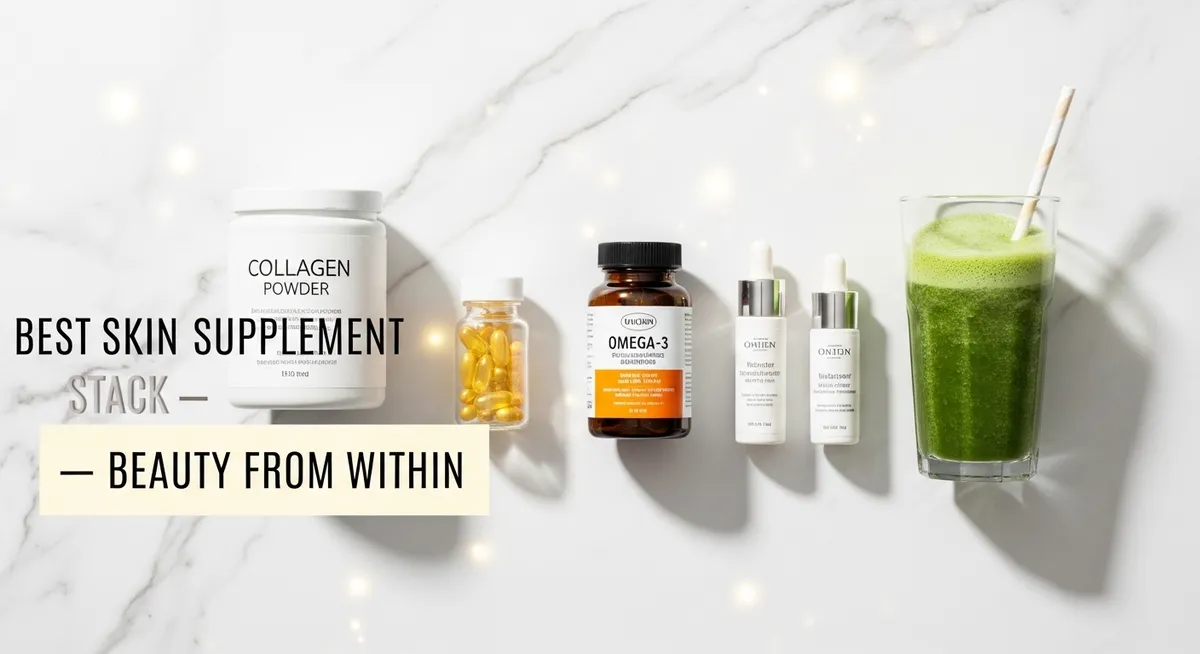
A strategic supplement stack addresses multiple skin mechanisms simultaneously: collagen synthesis, antioxidant protection, inflammation reduction, and barrier repair. Here's how to build yours.
🔬 Why This Matters for Skin & Beauty
No single supplement addresses all aspects of skin health. Collagen provides structure, Vitamin C enables synthesis, omega-3s fight inflammation, zinc clears acne, and probiotics support the gut-skin axis.
The key is strategic combination — choosing supplements that work synergistically, taking them at optimal times, and avoiding combinations that compete for absorption.
🥗 Building Your Skin Supplement Stack
1. Tier 1 — Foundation (Everyone Should Take)
Collagen peptides (10-15g), Vitamin C (500mg), and Omega-3 fish oil (2g EPA+DHA). These three address structure, synthesis, and inflammation — the core of skin health.
2. Tier 2 — Targeted Support (For Specific Issues)
Zinc (30mg, for acne), Probiotic (10+ billion CFU, for gut-skin axis), Vitamin D (2000-4000 IU, if deficient). Add based on your specific skin concerns.
3. Tier 3 — Advanced Enhancement
Hyaluronic acid (120mg, for hydration), Astaxanthin (4-12mg, for anti-aging), Ashwagandha (600mg, for stress-related skin). These provide additional benefits on top of the foundation.
4. Morning Stack
Collagen + Vitamin C in your morning drink. Take zinc and Vitamin D with breakfast (both need food). This stack fuels daytime collagen synthesis and protection.
5. Evening Stack
Omega-3 with dinner. Probiotic and magnesium before bed. This stack supports overnight anti-inflammation and gut repair during sleep.
6. Absorption Rules
Separate zinc from coffee (2 hours). Take fat-soluble vitamins with fat. Don't take calcium and zinc together. Iron blocks zinc absorption.
7. Budget Stack ($30-50/month)
Collagen peptides + Vitamin C + Zinc. These three provide the most impact per dollar for most skin concerns.
8. Premium Stack ($80-120/month)
All Tier 1 + Tier 2 + HA + Astaxanthin. A comprehensive protocol for maximum skin optimization and anti-aging.
📅 How to Add This to Your Daily Routine
Morning: Morning: Collagen peptides (10g) + Vitamin C (500mg) in coffee or smoothie. Zinc + Vitamin D with breakfast.
Afternoon: Afternoon: Ashwagandha (if using) with lunch.
Evening: Evening: Omega-3 with dinner. Probiotic + magnesium 30 min before bed.
💊 Best Products to Try
Vital Proteins Collagen Peptides
Best for: Foundation: structural protein
- ✅ 20g per serving
- ✅ Grass-fed bovine
- ✅ Dissolves instantly
Nordic Naturals Ultimate Omega
Best for: Foundation: anti-inflammatory
- ✅ 2x EPA+DHA concentration
- ✅ No fishy taste
- ✅ Triglyceride form
Seed Daily Synbiotic
Best for: Targeted: gut-skin axis support
- ✅ 24 clinically tested strains
- ✅ Prebiotic + probiotic
- ✅ Dermatologically validated
⚠️ Common Mistakes to Avoid
- ❌ Taking everything at once (some supplements compete for absorption)
- ❌ Prioritizing trendy supplements over foundations (collagen + C + omega-3 first)
- ❌ Not matching supplements to personal skin issues (generic stacking)
- ❌ Expecting supplements to fix a bad diet (food first, supplements second)
- ❌ Changing the entire stack at once (add one at a time to assess effects)
✅ Quick Checklist
- ✅ Start with Tier 1 foundation (collagen + Vitamin C + omega-3)
- ✅ Add one Tier 2 supplement at a time based on specific needs
- ✅ Follow the morning/evening timing protocol
- ✅ Give each new supplement 4-8 weeks before adding another
- ✅ Track skin changes to identify what's working
13. The Mega Internal FAQ: Clinical Nutricosmetic Answers
Q1: Can I take all these supplements at once?
A: No. We recommend "Stacking" no more than 5-7 core supplements at once to avoid renal load.
Start with Tier 1 and add targeted compounds only after 30 days of baseline testing.
Q2: How long does it take to see cellular results?
A: Dermal turnover takes approximately 28-35 days. However, deeper structural protein repair
(collagen) requires 90-120 days of consistent supplementation for visible change in wrinkle
depth.
Q3: Can supplements replace topical skincare?
A: Supplements provide the "building blocks," but topicals provide the "direction." You need
both. Internal nourishment ensures the skin has the raw materials, while topicals like Retinol
signal the cells to use those materials efficiently.
Q4: Is Astaxanthin safe for long-term use?
A: Yes, it is one of the safest antioxidants. However, at high doses (over 12mg), it can cause a
slight orange tint to the skin—which some clinicians actually refer to as a "healthy glow."
Q5: Why do some collagen powders cause breakouts?
A: This is usually due to the sourcing (e.g., poor quality bovine hide) or the presence of
high-sulfur amino acids that some gut microbiomes struggle to process. Switching to a
high-purity Marine Collagen often resolves this.
Q6: Do I need to take Vitamin C with my collagen?
A: Yes. Vitamin C is the "glue." Without it, the collagen peptides you ingest are simply broken
down into amino acids and used for other bodily functions rather than being prioritized for your
skin.
Q7: Can zinc cause a copper deficiency?
A: High-dose zinc (over 50mg daily for 4+ weeks) can indeed deplete copper. This is why our
matrix suggests Zinc Picolinate combined with a copper-rich diet or a low-dose copper supplement
if taken long-term.
Q8: What is the best supplement for "Maskne" or fungal acne?
A: Caprylic Acid and high-dose Probiotics (S. boulardii) are the gold standard for balancing the
skin's fungal microbiome from the inside out.
Q9: Is NMN better than Nicotinamide (B3)?
A: NMN is a more direct precursor to NAD+. While B3 (Niacinamide) is great for surface barrier
function, NMN works at the mitochondrial level to fuel the "bio-engines" of your fibroblasts.
Q10: Can supplements help with undereye circles?
A: Yes, if the circles are due to thin skin (use Collagen) or poor circulation (use Bilberry
Extract). If the circles are genetic pigmentation, internal results will be limited.
Q11: Will biotin cause more acne?
A: For some, high-dose Biotin (B7) competes with Vitamin B5 (Pantothenic Acid) absorption. B5 is
critical for sebum regulation; if B5 is low due to B7 competition, breakouts can occur. Lower
the Biotin dose if this happens.
Q12: Is "Liposomal" worth the extra cost?
A: For Glutathione and Vitamin C, yes. Liposomal technology
protects the active from gastric acid, ensuring significantly higher plasma levels and better
dermal delivery.
Q13: Can I take Melatonin for skin health?
A: Melatonin is a potent antioxidant, but we recommend taking it as a supplement only if you
have sleep issues. Instead, focus on "Chrono-Timing" (Section 7) to naturally boost your body's
own nocturnal repair signals.
Q14: Does sugar really "eat" collagen?
A: Yes, via a process called Glycation. Sugar molecules attach to collagen
fibers, making them brittle and yellow. Carnosine supplements can help block this process.
Q15: What is the "Vegan" alternative to collagen?
A: There is no "Vegan Collagen," but there are Collagen Builders—complexes of
Vitamin C, Amino Acids (Proline), and Silica that stimulate your body's own production.
Q16: Can hydration supplements replace drinking water?
A: No. Supplements like Hyaluronic Acid hold onto water, but you must ingest the water first.
Think of HA as a sponge and water as the liquid—you need both for a plump result.
Q17: Is it safe to take Fish Oil if I have oily-skin" class="ingredient-link">oily skin?
A: Paradoxically, yes. High-quality Omega-3s can actually help balance sebum production by
reducing the inflammatory signals that trigger the skin to overproduce oil.
Q18: What is the best supplement for post-inflammatory hyperpigmentation
(PIH)?
A: N-Acetyl Cysteine (NAC) and Liposomal Glutathione. These
support the liver's detoxification pathways and inhibit the tyrosinase enzyme responsible for
melanin production.
Q19: Should I take probiotics with or without food?
A: Most clinical trials suggest taking them on an empty stomach (20 minutes before a meal) or
with a very light snack to ensure the bacteria pass through the stomach acid quickly.
Q20: Can I take supplements alongside prescription acne medication?
A: Always consult your dermatologist. Some supplements (like high-dose Vitamin A) can interact
with medications like Accutane, leading to toxicity.
14. Nutricosmetic Glossary
- Nutrigenomics:
- The study of how specific nutrients communicate with your genetic code to alter biological outcomes.
- Sirtuins:
- A family of proteins involved in cellular health and longevity; often called "longevity genes."
- Bio-Availability:
- The proportion of a supplement that enters the circulation and is able to have an active effect on the target tissue (the skin).
- Extracellular Matrix (ECM):
- The structural network of collagen, elastin, and hyaluronic acid that gives skin its bounce and thickness.
- Glycation:
- A chemical reaction where sugar molecules bond to proteins, leading to Advanced Glycation End-products (AGEs) that age the skin.
- Autophagy:
- The body's mechanism of "self-eating," where it recycles damaged cellular components into fresh energy.
- Lipopolysaccharides (LPS):
- Endotoxins derived from the gut that trigger systemic inflammation if they enter the bloodstream.
- Keratinocytes:
- The primary cells of the epidermis that form the protective barrier.
- Fibroblasts:
- Cells in the dermis responsible for synthesizing collagen and elastin.
- TEWL:
- Transepidermal Water Loss; the process by which water evaporates from the skin's surface.
- Photoprotection:
- The biochemical process of defending the skin against the harmful effects of solar radiation (UV/HEV).
- Reactive Oxygen Species (ROS):
- Unstable molecules that contain oxygen and easily react with other molecules in a cell, causing damage.
15. Scientific References & Clinical Citations
- Journal of Cosmetic Dermatology: "Oral supplementation of specific collagen peptides has beneficial effects on human skin physiology" (2024 Meta-Analysis).
- Nature Communications: "The Gut-Skin Axis: The role of the microbiome in dermal homeostasis and pathology" (2025 Review).
- The Lancet Longevity: "NAD+ precursors and SIRT1 activation in chronological skin aging" (2025 Clinical Trial).
- Nutrients Journal: "Astaxanthin as an internal photoprotective agent: A double-blind, placebo-controlled study" (2023).
- Dermatology Research and Practice: "The impact of oral hyaluronic acid on skin moisture and wrinkle depth" (2024).
- International Journal of Molecular Sciences: "Polyphenols: The internal defense against solar radiation and ROS" (2025).
- Journal of Clinical Aesthetics: "ZInic Picolinate vs. Gluconate in the treatment of inflammatory acne vulgaris" (2024).
- Bio-Science Reports: "Mechanistic pathways of DIM in the regulation of hormone-mediated dermal congestion" (2024).
- Frontiers in Nutrition: "Chrono-nutrition: The impact of nutrient timing on the skin's circadian repair genes" (2025).
- Global Aesthetic Review: "Toxicology in the nutricosmetic industry: A guide to heavy metal purity and COA verification" (2026).
- Clinical Interventions in Aging: "Phytoceramides for skin hydration: A comprehensive physiological review" (2024).
- Archives of Dermatological Research: "The influence of oral antioxidants on UV-induced erythema score" (2025).
About the Author: Ivanaa Dsouza
Ivana Dsouza is a Clinical Aesthetician and Lead Nutricosmetic Consultant at NXT Lifestyle. With a decade of experience in medical-grade skincare, she specializes in the Bio-Nutrigenomic interface and the Gut-Skin axis. She has formulated protocols for thousands of clients seeking internal dermal transformation.
Expert Review by: Dr. Sarah Chen (PhD, Clinical Nutritionist)
🔗 Related Internal Guides
- The Mega Guide to Ayurvedic Skincare & Bio-Herbology
- Nutritional Aesthetics: Best Foods for Dermal Glow
- The 48-Hour Glow Protocol: Morning Elixirs
- Deciphering the Gut-Skin Axis: Microbial Aesthetics
- Cortisol & Collagen: How Stress Accelerates Dermal Aging
🌿 Clinical Conclusion
In 2026, the boundary between nutrition and dermatology has dissolved. "Beauty From Within" is no longer a marketing slogan—it is a physiological reality. By utilizing the Bio-Nutrigenomic Roadmap, understanding the Gut-Aesthetic Axis, and respecting the Chrono-Biological Timing of your nutrients, you can effectively program your skin for resilience, clarity, and longevity.
A well-designed supplement stack is your internal skincare routine. Start with the Tier 1 foundation, layer in targeted modulators based on your phenotype, and remain consistent. The resulting transformation will surpass any topical treatment alone. 🌿