1. The Healer and the Divine
In ancient Egypt, medicine and spirituality were not separate domains—they were two aspects of a single healing tradition. The Egyptian word for physician, swnw, was closely related to "priest." To be a healer was to be a servant of the divine, channeling the gods' power through ritual, prayer, and the application of natural medicines. This integration created one of the most sophisticated holistic systems in the ancient world.
Egyptian healers saw disease as an imbalance between the individual and the divine order of the universe. A skin condition might be addressed not just with botanical oils, but with spiritual harmony—restoring the soul to its proper state of Maat.
2. Isis: The Great Mother of Healing

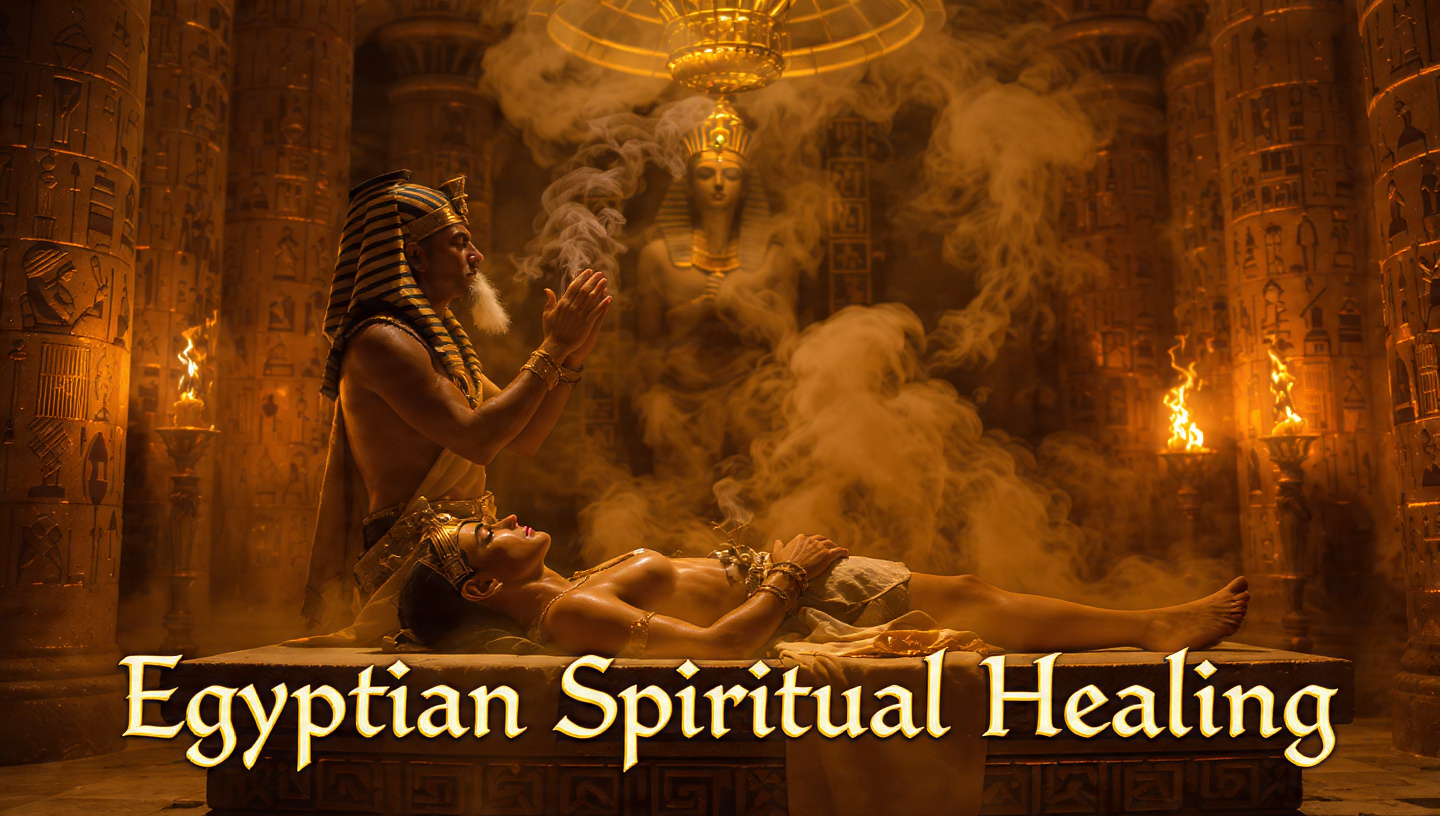
Sacred rituals were performed to align the patient's spirit with the healing forces of the divine.
Isis was the supreme healer who could overcome even death. Egyptians prayed to her for restoration, and her temples functioned as centers where the sick would seek divine intervention through incubation (temple sleep) and herbal medicine. Modern psychodermatology recognizes what the Egyptians understood intuitively: that mental and spiritual states directly affects physical health.
3. Sekhmet: Transformation Through Power
Sekhmet, the lioness-headed goddess, held the power to bring and cure disease. Her priests were skilled physicians for conditions with inflammatory or infectious origins. This "Sekhmet principle"—using powerful interventions to overcome illness before restoration is possible—mirrors modern approaches to intensive medical care.
4. Thoth: The Lord of Medical Wisdom
Thoth was the source of all medical knowledge, the divine scribe who recorded the sacred medical papyri. Egyptian physicians were considered "Hearers of Thoth," tasked with studying the laws of health. Modern research confirms that patient education—the "Thoth principle"—significantly improves healing outcomes by empowering individuals to understand their own physiology.
5. Heka: The Sacred Power of Intention
In Egypt, heka (magic) was the power to effect change through ritual and word. Medical spells were spoken during treatments to psychically prepare the patient for recovery. Modern studies on the "placebo effect" and functional MRI imaging show that spoken intention and belief activate real neurological pathways that produce physiological changes.
6. Maat: The Cosmic Order of Health
Maat was the principle of cosmic balance. Disease was seen as a disruption of this order. Healing was the return to balance—what modern physiology calls homeostasis. Maintaining Maat required ethical living and attention to all dimensions of existence, ensuring that the body remained a harmonious vessel for the soul.
7. Final Thoughts: The Eternal Connection
The ancient Egyptian approach recognizes that health arises from balance across the physical, mental, and spiritual planes. By honoring all dimensions of our being, we follow a lineage of healing that understands health as more than just the absence of disease—it is the presence of harmony within the divine order of life.
Explore More: Egyptian Wisdom
→ Read next:
🛡️ Disclaimer
This guide is for educational purposes only and does not constitute medical advice. Always consult with a qualified healthcare provider for any serious health concerns.