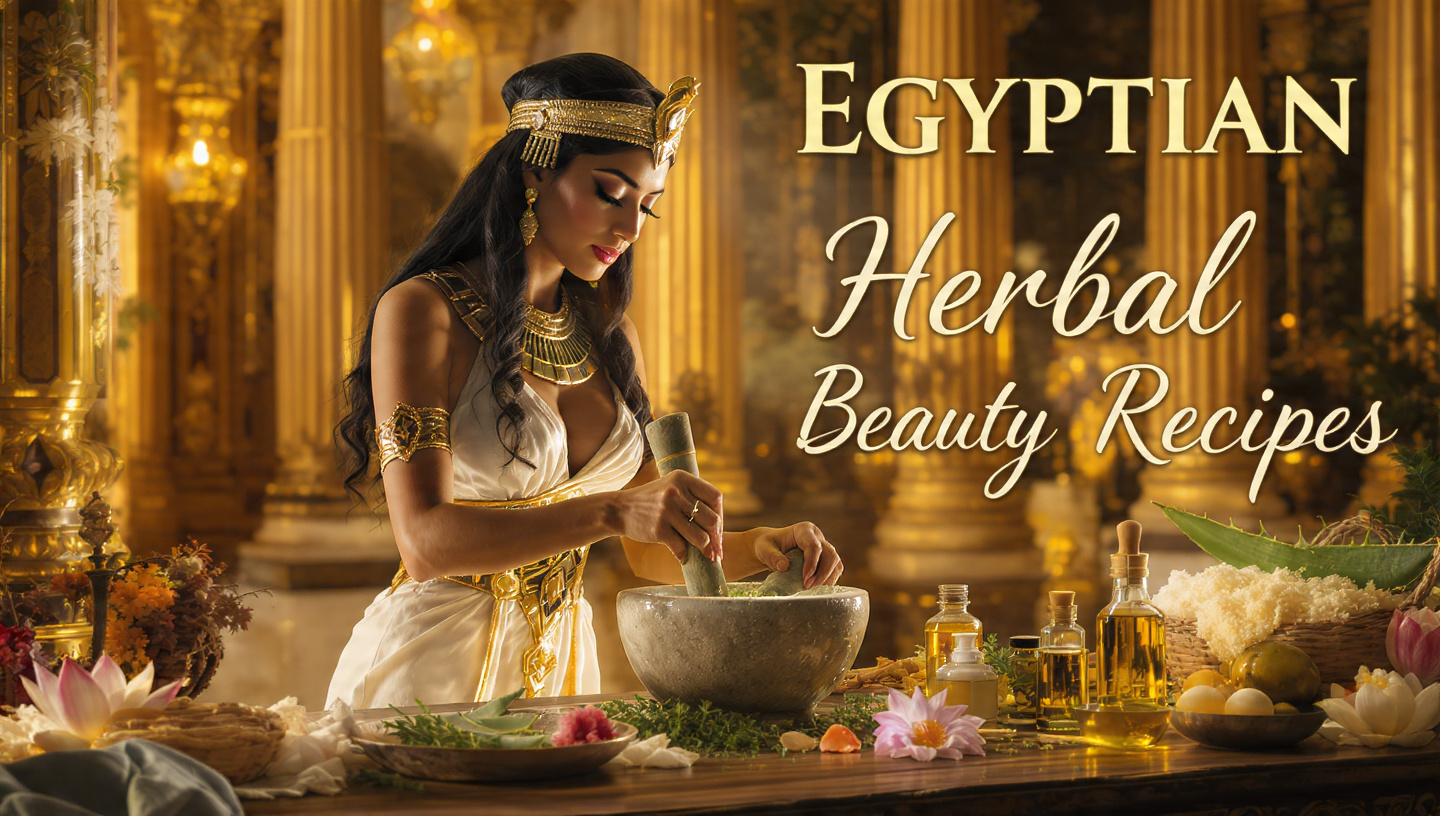
1. Botanical Skincare Secrets from the Nile
Ancient Egypt is widely celebrated for its architectural marvels, spiritual traditions, and sophisticated medical knowledge. Among its many contributions to human civilization, Egyptian beauty rituals stand out as some of the earliest organized skincare systems in recorded history. Egyptian herbal beauty recipes combined plant oils, flowers, mineral clays, and natural extracts to nourish the skin and protect it from the harsh desert climate.
For Egyptians, beauty was closely connected to health, balance, and spiritual harmony. Smooth, glowing skin was not merely a sign of attractiveness but also a reflection of vitality and personal wellbeing. As a result, daily skincare rituals were considered essential practices that helped maintain both physical and emotional balance.
2. The Philosophy of Egyptian Beauty

Daily application of botanical oils was a foundational ritual for maintaining skin resilience and luminosity.
Personal grooming was seen as a way to respect both oneself and the divine forces believed to govern life. Both men and women used herbal preparations to cleanse, moisturize, protect, and perfume their skin. Egyptians understood that healthy skin required three essential elements: cleansing, nourishing oils, and protective ingredients to guard against sun and dryness.
3. Key Ingredients in the Royal Pharmacy
Egyptian beauty preparations relied on ingredients that were readily available in nature, selected for both their fragrance and their therapeutic benefits.
- Aloe Vera: The "plant of immortality" provides deep hydration and calms sun-damaged skin.
- Honey: A powerful antibacterial and humectant that locks moisture into the skin.
- Moringa Oil: Prized for its stability, it strengthens the skin barrier and provides antioxidant protection.
- Milk: Natural lactic acid in milk (famously used by Cleopatra) gently exfoliates while maintaining hydration.
- Frankincense: Supports skin regeneration and helps reduce the appearance of fine lines.
4. Traditional Herbal Beauty Formulations
One of the most effective Egyptian skincare recipes involved mixing honey with fresh milk. This combination created a gentle mask that hydrated and softened the skin through the synergy of lactic acid and natural humectants. Moringa oil was frequently used as a daily moisturizer, its lightweight texture allowing it to absorb easily without leaving a heavy residue.
Egyptians also used natural clay from the Nile riverbanks to create cleansing masks that helped draw out impurities. A mixture of aloe gel and botanical oils was often used as a soothing balm to calm irritated or sun-exposed skin, restorations the skin's natural moisture balance.
5. The Role of Aromatic Herbs
Egyptians frequently infused their beauty preparations with fragrant herbs and flowers such as lotus, rose, and jasmine. These flowers were steeped in oils or blended into cosmetic preparations to create soothing and uplifting fragrances. The use of aromatic herbs also supported emotional wellbeing, as pleasant scents were believed to calm the mind and promote inner balance.
6. Modern Insights from Ancient Wisdom
Many modern skincare products rely on synthetic ingredients designed for quick effects. Ancient Egyptian beauty recipes, however, focused on long-term nourishing and protection using natural botanical ingredients. Modern skincare science increasingly recognizes the importance of antioxidants and plant oils—all elements that were present in Egyptian beauty rituals for millennia.
7. Final Thoughts on Eternal Beauty
The herbal beauty traditions of ancient Egypt demonstrate how natural ingredients can support healthy, radiant skin. By studying these traditions, we gain valuable insights into how simple botanical resources can promote long-term skin health and wellbeing.
Raw Organic Honey
The "food of the gods" used in Egyptian beauty recipes. Raw honey provides antibacterial properties, deep hydration, and natural glow.
View on Amazon →Explore More: Egyptian Beauty
→ Read next: