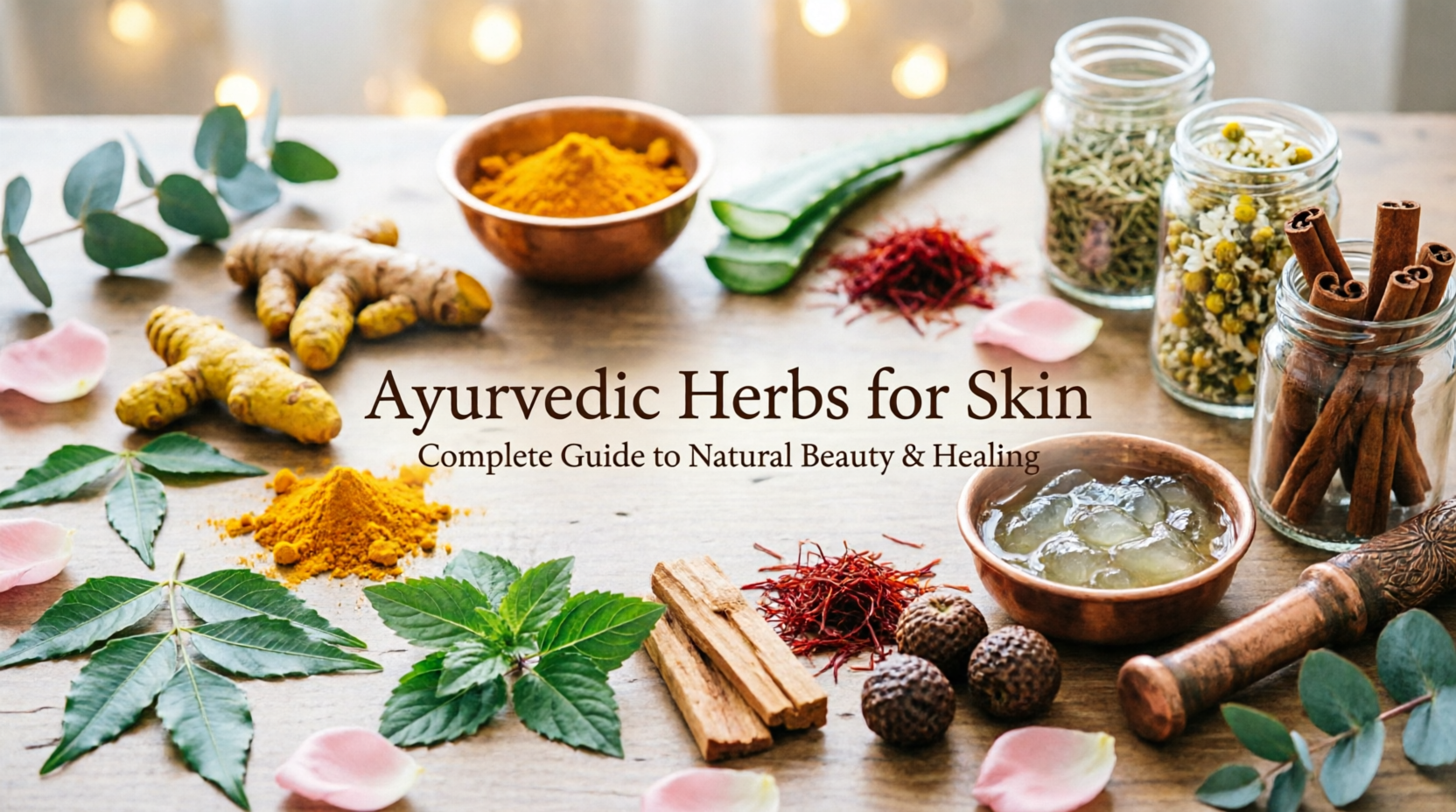
Ayurveda, the ancient Indian system of medicine that dates back over 5,000 years, offers a holistic approach to skin health that goes far beyond surface-level treatments. The term "Ayurveda" comes from Sanskrit, where "Ayur" means life and "Veda" means knowledge or science. This timeless wisdom recognizes that healthy, radiant skin is not just about external applications but reflects our overall internal well-being, digestive health, stress levels, and lifestyle choices.
Holistic Healing ⭐Understanding Doshas and Skin Health
In Ayurveda, every individual is born with a unique constitution known as Prakriti, which is determined by the balance of three fundamental energies or doshas: Vata, Pitta, and Kapha. Understanding your dominant dosha is the key to choosing the right herbs for your skin.
Vata Skin Type
Vata skin is typically dry, thin, and prone to premature aging. When Vata is imbalanced, you may experience tightness, flakiness, fine lines, and dullness. The best herbs for Vata skin are those that provide nourishment, hydration, and grounding energy.
Best Herbs for Vata Skin
- Ashwagandha: Adaptogenic properties help reduce stress and nourish the skin from within
- Amla: Rich in Vitamin C, provides deep hydration and antioxidant protection
- Shatavari: Rejuvenating herb that supports skin moisture and elasticity
Pitta Skin Type
Pitta skin tends to be sensitive, warm, and prone to inflammation, redness, and breakouts. When Pitta is imbalanced, you may experience rosacea, acne, sun sensitivity, or premature wrinkles. Cooling, soothing herbs are ideal for Pitta skin.
Best Herbs for Pitta Skin
- Aloe Vera: Cooling and soothing, calms inflammation and irritation
- Sandalwood: Cooling, anti-inflammatory, perfect for sensitive Pitta skin
- Tulsi (Holy Basil): Purifies blood, reduces inflammation, and protects skin
Kapha Skin Type
Kapha skin is typically oily, thick, and prone to congestion, blackheads, and sluggish complexion. When Kapha is imbalanced, you may experience excess oiliness, enlarged pores, or water retention. Lightening and detoxifying herbs work best for Kapha skin.
Best Herbs for Kapha Skin
- Turmeric: Purifies skin, reduces excess oil, and fights acne-causing bacteria
- Neem: Powerful antibacterial and purifying herb for oily, congested skin
- Manjistha: Known as "the skin purifier," detoxifies and brightens complexion
Related Article
Discover more about your dosha and how it affects your skin in our comprehensive guide to What is Ayurveda: A Beginner's Guide and learn about creating a personalized Ayurvedic Anti-Aging Routine.
Top Ayurvedic Herbs for Skin
Turmeric (Curcuma longa) - The Golden Healer
Turmeric is perhaps the most celebrated Ayurvedic herb for skin health. Known as "Haridra" in Sanskrit, this golden spice has been used for thousands of years to treat various skin conditions and maintain a radiant complexion.
Skin Benefits
- Powerful Anti-inflammatory: Reduces skin inflammation and redness
- Antibacterial Properties: Fights acne-causing bacteria
- Antioxidant Protection: Fights free radicals and prevents premature aging
- Brightening Effect: Helps reduce hyperpigmentation and evens skin tone
- Wound Healing: Accelerates skin repair and reduces scarring
How to Use
Turmeric can be used in face masks, as a culinary spice, or in oils. For a simple face mask, mix 1 teaspoon turmeric powder with honey and yogurt. Apply for 15-20 minutes and rinse with warm water.
Amazon Picks
Explore our curated selection of organic turmeric powder and turmeric supplements to incorporate this ancient healer into your routine.
Neem (Azadirachta indica) - The Purifying Power
Neem, called "Sarva Roga Nivarini" in Ayurveda (curer of all ailments), is one of the most powerful herbs for skin purification. Its antibacterial, antifungal, and anti-inflammatory properties make it a go-to remedy for various skin issues.
Skin Benefits
- Acne Fighter: Combats acne-causing bacteria and reduces breakouts
- Detoxifying: Purifies blood and removes toxins that cause skin problems
- Antifungal: Treats fungal infections like athlete's foot and ringworm
- Reduces Scars: Helps fade acne scars and blemishes
- Pest Control: Natural remedy for lice and scabies
How to Use
Neem can be used as neem water for face washing, in face masks with other herbs, or as neem oil (diluted) for application. For acne-prone skin, steep neem leaves in hot water, let cool, and use as a toner.
Shop Neem Products
Discover authentic neem oil for skin and neem powder for DIY skincare.
Aloe Vera (Kumari) - The Cooling Gel
Aloe Vera, known as "Kumari" in Ayurveda (the virgin), is prized for its cooling and soothing properties. It is particularly beneficial for Pitta skin but works well for all skin types.
Skin Benefits
- Soothes Burns: Natural remedy for sunburns and thermal burns
- Hydrating: Provides deep moisture without clogging pores
- Anti-aging: Contains vitamins and antioxidants that fight free radicals
- Healing: Accelerates wound healing and reduces scarring
- Anti-acne: Gentle on acne-prone skin while fighting bacteria
How to Use
Apply fresh aloe vera gel directly to skin as a moisturizer or after-sun treatment. For enhanced benefits, combine with other herbs like turmeric or neem in face masks.
Continue Learning
Explore more about aloe vera's skin benefits in our detailed articles on Aloe Vera for Face and Aloe Vera Mask for Acne.
Tulsi (Holy Basil) - The Sacred Healer
Tulsi, or Holy Basil, is considered sacred in Hinduism and is one of the most important herbs in Ayurveda. Its purifyings and strengthening properties make it excellent for skin health.
Skin Benefits
- Blood Purifier: Cleanses blood and reduces skin eruptions
- Antibacterial: Fights skin infections and acne
- Stress Relief: Adaptogenic properties help reduce stress-related skin issues
- Antioxidant: Protects skin from environmental damage
- Anti-inflammatory: Reduces skin inflammation and redness
How to Use
Make tulsi tea and use it as a face toner, or crush fresh tulsi leaves into a paste for face masks. Tulsi can also be taken internally as tea for overall skin health.
Sandalwood (Chandana) - The Cooling Balm
Sandalwood, known as "Chandana" in Sanskrit, has been used for skin care for over 4,000 years. Its cooling, soothing properties make it especially beneficial for Pitta skin and sensitive skin types.
Skin Benefits
- Cools Inflammation: Soothes sunburn, rashes, and skin irritations
- Anti-aging: Tightens skin and reduces fine lines
- Brightening: Evens skin tone and reduces dark spots
- Acne Treatment: Antibacterial properties help treat acne
- Fragrance: Natural aromatic that calms the mind
How to Use
Use sandalwood powder mixed with rose water for a soothing face mask. Sandalwood paste can also be applied to soothe sunburns and skin irritations.
Explore More
Discover the ancient uses of sandalwood in our article on Benefits of Sandalwood for Skin.
Manjistha (Rubia cordifolia) - The Skin Purifier
Manjistha is known as "the skin purifier" in Ayurveda. This powerful herb is primarily used to detoxify the blood and treat various skin conditions from within.
Skin Benefits
- Blood Purification: Cleanses blood and treats skin disorders
- Brightening: Reduces hyperpigmentation and evens skin tone
- Anti-inflammatory: Treats inflammatory skin conditions
- Wound Healing: Promotes healing of wounds and ulcers
- Detoxifying: Supports liver detoxification for clearer skin
How to Use
Manjistha is typically taken internally as a powder or capsule. It can also be used externally in face masks combined with other herbs.
Gotu Kola (Brahmi) - The Rejuvenator
Gotu Kola, also known as "Brahmi" in Ayurveda, is famous for its rejuvenating and anti-aging properties. It is often called "the fountain of life" in Ayurvedic texts.
Skin Benefits
- Collagen Production: Stimulates collagen synthesis for firmer skin
- Anti-aging: Reduces fine lines, wrinkles, and age spots
- Wound Healing: Accelerates healing of burns, scars, and wounds
- Cellular Renewal: Promotes healthy skin cell regeneration
- Circulation: Improves blood flow to skin cells
How to Use
Gotu Kola can be taken as tea, tincture, or capsule. For topical use, look for Gotu Kola-infused oils or creams.
Continue Your Journey
Learn more about anti-aging herbs in our article on Best Herbs for Anti-Aging.
Ashwagandha (Withania somnifera) - The Adaptogenic Shield
Ashwagandha, meaning "smell of horse" in Sanskrit, is one of the most powerful adaptogenic herbs in Ayurveda. It helps the body cope with stress, which is a major contributor to skin problems.
Skin Benefits
- Stress Reduction: Lowers cortisol levels that cause breakouts
- Anti-aging: Antioxidants fight free radicals and slow aging
- Moisturizing: Improves skin hydration and elasticity
- Immune Support: Strengthens skin's natural defense mechanisms
- Sleep Enhancement: Promotes restful sleep crucial for skin repair
How to Use
Ashwagandha is best taken internally as a powder (churna) mixed with warm milk or as capsules. It can also be found in various skincare products.
Amazon Favorites
Explore our curated selection of organic ashwagandha powder and ashwagandha supplements.
Licorice (Yashtimadhu) - The Brightening Agent
Licorice root, known as "Yashtimadhu" in Ayurveda, is prized for its sweet flavor and powerful skin-brightening properties. It is particularly effective for treating hyperpigmentation and uneven skin tone.
Skin Benefits
- Skin Brightening: Reduces dark spots and hyperpigmentation
- Anti-inflammatory: Soothes irritated and sensitive skin
- Melatonin Inhibitor: Blocks melanin production for even skin tone
- Moisturizing: Hydrates and softens the skin
- Sun Protection: Offers some protection against UV damage
How to Use
Licorice root can be used in face masks, as a powder mixed with water, or in skincare products. For brightening, look for products containing licorice extract.
Saffron (Kesar) - The Golden Spice
Saffron, known as "Kesar" in Ayurveda, is one of the most expensive and prized spices in the world. Its incredible skin benefits have been celebrated for centuries.
Skin Benefits
- Brightening: Evens skin tone and reduces dark spots
- Hydrating: Moisturizes and improves skin texture
- Anti-aging: Antioxidants fight signs of aging
- Anti-acne: Antibacterial properties help fight breakouts
- Radiance Boost: Gives skin a natural, golden glow
How to Use
Soak a few strands of saffron in milk or rose water, then apply to the face. You can also add saffron to your moisturizer or use it in face masks.
Related Articles
Discover more about saffron's skin benefits in our guide to Benefits of Saffron for Skin.
Amla (Indian Gooseberry) - The Vitamin C Powerhouse
Amla, or Indian Gooseberry, is one of the most powerful rejuvenating herbs in Ayurveda. It is the richest natural source of Vitamin C, making it exceptional for skin health.
Skin Benefits
- Antioxidant Protection: High Vitamin C content fights free radicals
- Collagen Boost: Supports natural collagen production
- Brightening: Reduces pigmentation and improves radiance
- Anti-aging: Prevents premature aging and wrinkles
- Detoxifying: Purifies blood for clearer skin
How to Use
Amla can be consumed fresh, as a powder, as juice, or in supplement form. For topical use, look for amla-infused products.
Shatavari (Asparagus racemosus) - The Female Rejuvenator
Shatavari is known as "the hundred husbands" in Sanskrit, referring to its rejuvenating and nourishing properties, particularly for female health. It is equally beneficial for skin.
Skin Benefits
- Hydrating: Deeply moisturizes dry, dehydrated skin
- Anti-aging: Promotes youthful, supple skin
- Hormonal Balance: Helps with stress-related skin issues
- Soothing: Calms sensitive, irritated skin
- Cellular Health: Supports healthy skin cell regeneration
How to Use
Shatavari is typically taken internally as a powder or tablet. It can be mixed with warm milk or water for consumption.
Lodhra (Symplocos racemosa) - The Astringent
Lodhra has been used in Ayurveda for its powerful astringent properties. It is particularly useful for oily and acne-prone skin.
Skin Benefits
- Astringent: Tightens pores and reduces excess oil
- Acne Treatment: Helps treat acne and prevents future breakouts
- Wound Healing: Promotes healing of skin wounds
- Anti-inflammatory: Reduces skin inflammation
- Skin Toning: Improves overall skin texture and tone
How to Use
Lodhra bark can be ground into a powder and used in face masks with water or rose water. It is also available in capsule form.
Usheera (Vetiver) - The Cooling Grassy Root
Vetiver, known as "Usheera" in Ayurveda, is a fragrant grass with powerful cooling and soothing properties. It is especially beneficial for Pitta-related skin issues.
Skin Benefits
- Cooling: Reduces heat and inflammation in the skin
- Hydrating: Provides long-lasting moisture
- Anti-aging: Antioxidants fight signs of aging
- Soothing: Calms irritated, sensitive skin
- Fragrance: Natural, earthy scent that calms the mind
How to Use
Vetiver can be used as vetiver water (soaked and strained) as a toner, or in face masks. Vetiver essential oil can be added to skincare products.
Daruharidra (Berberis aristata) - The Natural Antiseptic
Daruharidra, also known as Indian Barberry, contains berberine, a powerful compound with strong antimicrobial and antiseptic properties.
Skin Benefits
- Antibacterial: Fights acne-causing bacteria effectively
- Antifungal: Treats fungal skin infections
- Anti-inflammatory: Reduces skin inflammation and redness
- Wound Healing: Promotes faster healing of skin wounds
- Skin Toning: Improves overall skin appearance
How to Use
Daruharidra is typically used in powder form, mixed with water or other liquids for face masks. It is also available as an extract.
DIY Ayurvedic Skin Care Recipes
Turmeric Face Mask for Glowing Skin
Ingredients
- 1 teaspoon turmeric powder
- 1 teaspoon honey
- 1 teaspoon yogurt
- Few drops of rose water (optional)
Instructions
- Mix all ingredients in a bowl until you get a smooth paste
- Apply evenly to clean face, avoiding eye area
- Leave on for 15-20 minutes
- Rinse with warm water and pat dry
- Use 2-3 times per week for best results
Neem & Tulsi Face Pack for Acne-Prone Skin
Ingredients
- 1 tablespoon neem powder
- 1 tablespoon tulsi powder
- 1 teaspoon manjistha powder
- Rose water (as needed)
Instructions
- Mix all powders together
- Add rose water gradually to form a paste
- Apply to face and neck
- Leave on for 20-30 minutes
- Rinse with cool water
- Use daily for acne-prone skin
Aloe & Sandalwood Soothing Mask
Ingredients
- 2 tablespoons fresh aloe vera gel
- 1 teaspoon sandalwood powder
- 1 teaspoon rose water
- Few drops of almond oil (optional)
Instructions
- Combine aloe vera gel and sandalwood powder
- Add rose water and mix well
- Apply to face and leave for 20 minutes
- Rinse with lukewarm water
- Follow with moisturizer
Triphala Face Wash for Detox
Ingredients
- 1 teaspoon Triphala powder
- 1 cup warm water
Instructions
- Mix Triphala powder in warm water
- Let it steep for 10 minutes
- Strain the liquid
- Use as a face wash in the morning
- Follow with your regular skincare routine
Scientific Evidence & Research
Modern scientific research has begun to validate what Ayurvedic practitioners have known for millennia. Numerous studies have confirmed the skin benefits of various Ayurvedic herbs.
Turmeric Research
Curcumin, the active compound in turmeric, has been extensively studied for its anti-inflammatory, antioxidant, and antimicrobial properties. Research published in the Journal of Cosmetic Science found that turmeric exhibits significant anti-aging and skin-protective effects.
Neem Research
Studies have confirmed neem's antibacterial properties against various strains of bacteria, including Propionibacterium acnes (the bacteria that causes acne). Its antifungal properties have also been validated in multiple studies.
Aloe Vera Research
Clinical studies have demonstrated aloe vera's effectiveness in treating burns, wound healing, and moisturizing skin. A review in the Journal of Pharmacognosy confirmed aloe vera's anti-inflammatory and skin-healing properties.
Gotu Kola Research
Research has shown that gotu kola stimulates collagen production and improves wound healing. Studies have also confirmed its anti-aging effects and ability to improve skin elasticity.
Shop Ancient Wisdom
Incorporate scientifically-validated Ayurvedic herbs into your routine: explore our curated selection of Triphala powder, Gotu Kola supplements, and licorice root extract.
Precautions & Safety Guidelines
Important Safety Information
- Allergy Test: Always perform a patch test before using any new herb topically
- Pregnancy: Consult your healthcare provider before using herbal supplements during pregnancy
- Medications: Some herbs may interact with medications. Consult a healthcare professional
- Quality: Purchase herbs from reputable sources that test for purity and contaminants
- Dosage: Follow recommended dosages and start with small amounts
- Duration: Don't use herbs continuously for extended periods without professional guidance
Conclusion: Embrace Ayurvedic Wisdom for Radiant Skin
The journey through Ayurvedic herbs for skin reveals a treasure trove of natural solutions that have stood the test of time. From the golden brilliance of turmeric to the cooling embrace of sandalwood, from the purifying power of neem to the rejuvenating properties of gotu kola, these ancient botanicals offer comprehensive, holistic approaches to skin health that modern science continues to validate.
What makes Ayurvedic skin care truly special is its personalized, whole-body approach. Rather than treating symptoms in isolation, Ayurveda addresses the root causes of skin problems – whether they stem from digestive issues, hormonal imbalances, stress, environmental toxins, or dosha imbalances.
Continue Your Journey
Explore more Ayurvedic and holistic healing articles:
As you embark on your journey with Ayurvedic herbs, remember that consistency and patience are key. These ancient botanicals work in harmony with your body's natural rhythms, supporting gradual, sustainable change. Start with one or two herbs that resonate with your skin type and concerns, observe how your skin responds, and gradually build your personalized herbal skincare routine.