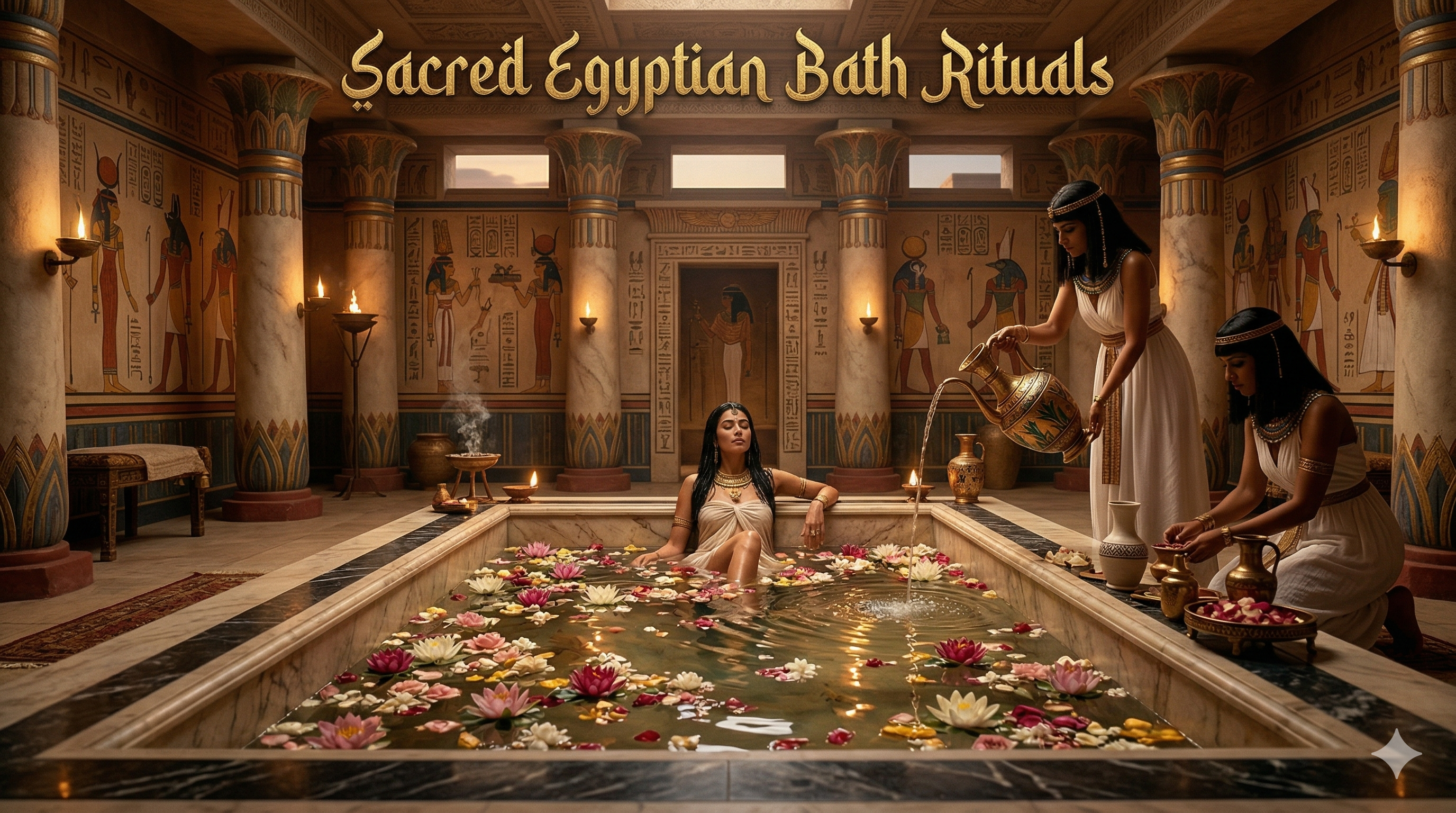
1. The Sacred Waters of the Nile
In ancient Egypt, bathing was never merely about cleanliness—it was a spiritual practice, a health ritual, and an expression of divine favor. The Egyptians lived in a harsh desert environment where water was precious, yet they developed elaborate bathing traditions that transformed a simple act of washing into a transformative experience. To be clean in ancient Egypt was to be blessed, to be purified, and to embody the divine order of the universe.
Egyptian temples and palaces featured sophisticated bathing facilities. The bathhouse, called the "house of water," was considered a sacred space where the physical and spiritual were cleansed together. Pharaohs and nobles employed teams of attendants to prepare their baths, mixing precious oils and extracts, heating the water with aromatic woods, and massaging the bather with fragrant unguents.
2. Cleopatra's Legendary Milk Baths
No discussion of Egyptian bathing rituals can begin without addressing the most famous: Cleopatra's milk baths. The last Pharaoh of Egypt transformed bathing from daily necessity into luxurious ritual, using ingredients so precious they were worth more than gold.
The science behind Cleopatra's milk baths is remarkably sound. Milk contains lactic acid, an alpha-hydroxy acid (AHA) that has become a staple of modern dermatology. Lactic acid works by gently dissolving the intercellular "glue" that holds dead skin cells together, revealing the fresh, radiant skin beneath.

Bathing preparations often involved grinding potent botanicals to be infused into the water.
Regular use of lactic acid provides multiple benefits for skin health and appearance. It improves skin texture by reducing roughness and promoting cell turnover. It stimulates collagen production in the dermis, addressing one of the primary causes of facial aging.
3. The Egyptian Art of Cleansing: Natron and Soapwort
Before modern soaps, ancient Egyptians developed sophisticated cleansing agents from natural materials found in their environment. The most important was natron, a naturally occurring salt found in dried lake beds in the Egyptian desert. Natron was so essential that it was considered a sacred substance, mined and processed with ritual significance.
Another important cleansing plant was soapwort (Saponaria officinalis), known in Egypt as "the soap plant." The roots and leaves contain saponins, natural soap-like compounds that produce a gentle lather when mixed with water. Soapwort was particularly valued for cleaning delicate fabrics and sensitive skin.
4. Aromatic Steam Treatments
Egyptian bathing facilities often included vaporia—steam rooms or sweat lodges where bathers could experience the therapeutic effects of heated, aromatic air. These steam chambers were constructed of stone or brick and heated by fires beneath their floors.
Steam creates optimal conditions for skin cleansing and product absorption. Heat causes the pores to dilate (open), allowing trapped sebum, dead skin cells, and other debris to be released more easily. This deep cleansing is difficult to achieve through surface washing alone.
5. The Ritual of Oil Application
After cleansing and steaming, Egyptian bathing rituals concluded with the application of fragrant oils—a practice called anointing. This was not optional but essential, as the Egyptians understood that stripping away oils during cleansing needed to be followed by restoring them.
Applying oils after bathing helps restore the protective lipid barrier. The oils penetrate between skin cells, replacing lost lipids and creating a breathable protective coating that locks in moisture.
6. Egyptian Exfoliation Methods
Ancient Egyptians understood that smooth, radiant skin required regular removal of dead skin cells. They developed various exfoliation methods using materials readily available in their environment. Pumice from volcanic eruptions along the Nile was ground into fine powders and used as gentle abrasives.
Egyptians also used ground grains—barley, wheat, and emmer—as physical exfoliants. These were mixed with water or oils to create scrubs that removed dead skin while revealed the fresh layer beneath.
7. Creating Your Egyptian Bath Ritual
The Egyptians approached bathing as a sacred practice, not a chore. This mindset transformed an ordinary activity into a ritual of purification and renewal. By treating your bathing ritual with the same reverence, you can experience its transformative power.
A sacred approach to bathing begins before you enter the water. It involves preparing the space, setting an intention, and approaching the experience with mindfulness.
8. The Living Tradition of Egyptian Bathing
The bathing rituals of ancient Egypt represent one of humanity's oldest traditions of self-care and purification. More than simple hygiene, these rituals acknowledged that caring for the body is a form of honoring the divine within us.
🛡️ Disclaimer
This guide is for educational purposes only and does not constitute medical advice. Always consult with a qualified healthcare provider before starting any new bathing or skincare regimen.